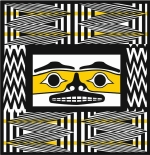
"Chilkat Spirit" by Mike A. Jackson
Funded in part by the National Science Foundation
Sponsors include the Southeast Alaska Native Educators Association and the Sitka Tribe of Alaska
Conference Poster (pdf)
Conference Booklet (pdf)
Proceedings
Clan Membership
(Word document)
Proceedings
(under developement)
Abel, Tom Skillaaw
Sta Staas clan (Eagle/Beaver), Howkan, Kaigani Haida
Reflections on Roots and Resurrections
This presentation is about how our clans (our families) transcend what
are termed “tribes”--how, like the forests upon which we depended,
our roots intertwine, and how those intertwined roots were, and are, our
basis for being, our identity. Resurrections will be about where “we” are,
and what I saw, did and experienced along the way. I will talk about “the
coming our by going back into,” and perhaps give some thoughts about
the “supernatural” and the lack of the strictures and limitations
of the controlling factor. Time. Canoes, what they were and what they could
be now.
Abraham, Elaine Chooshaa
Tsisk’w Hít (Owl House), Gineixkwaan/Kwaashk’I Kwáan,
Laaxaayík Kwáan
The Yakutat Tlingit and the Russians - 1795 to 1825 (Oral Traditions)
Oral histories of the 1805 destruction of the Russian Fort at Ankouw, Yakutat.
Abraham,
Elaine Chooshaa (with Judith Ramos)
This is Kuxaankutaan’s (Dr. Frederica De Laguna’s) Song
From 1949 to 1954, Dr. Frederica Annis de Leo de Laguna, then Chair of
Sociology and Anthropology, Bryn Mawr College, recorded from our Yakutat
elders, the history and culture of the Yakutat Tlingit. This paper describes
the other side of Freddy, as an adopted clan member who was fascinated
with Tlingit music. In the dedication to the song, she acknowledged Olaf
Abraham (Elaine’s father) from whom she learned methods of composing
Tlingit songs. With the help of John Ellis, a Gineix Kwaan/Kwaashk’i
Kaagwaantaan man, Freddy composed this song in honor of the Yakutat people
Adams
Sr., Bertrand Kádáshaan
Ich Hít (Boulder House), L’uknax.ádi clan, Laaxaayík
Kwáan (Yakutat)
Yakutat Camp #13 Alaska Native Brotherhood Hall History and Renovation
The Yakutat ANB Hall construction was completed in the 1920’s and
has served its membership and the community of Yakutat with major events
for over 80 years. It has survived several fires and condemnation by
the city and borough and state fire marshal, but the membership decided
that
the hall should be upgraded and restored as close to it’s original
condition as possible. We are now in the process of doing some emergency
repair works so that a much larger renovation project can be completed
so that the hall will be able to serve the community for another 80+
years.
Adams Sr., Bertrand Kádáshaan
Natural Laws and Traditional Ecological Knowledge
In the olden days Native Americans lived with nature and reaped the benefits
of their environment by living off a land based economy. When outside
influences came, their purpose was to conquer. This caused an unbalance
in Native
Americans’ lives that we are still struggling to recover from today.
When the East Alsek River sockeye salmon experienced a crash in the 1980s,
a TEK project was completed by the Yakutat Tlingit tribe to document
ways in which the Tlingits managed their resources so that future management
schemes would include traditional knowledge bridged with western science.
Anderson, Margaret Seguin
University of Northern British Columbia / Ts'msyen Sm'algyax Authority
Visible Grammar: Tools for Revitalizing Tsimshian Sm'algyax
Tsimshian Sm'algyax is severely endangered - there are now only a few
hundred speakers, all over 60. While a number of initiatives are in progress
to
revitalize the language, a major barrier for learners has been the complex
grammar; learners can acquire core vocabulary fairly easily, but find
themselves unable to figure out how to understand or use even simple
sentences. The
Ts'msyen Sm'algyax Authority sponsored a project to create a "user-friendly" grammar
of the language; through this we have created a set of Visible Grammar" modules
to assist learners by showing the basic sentence templates with colour-coding.
This presentation will review the various initiatives for language revitalizsation
and will demonstrate the potential of Visible Grammar.
Askren, Mique'l
Icesis Shgu' Goad Lax Skeek
Lax Skeek (Eagle Clan), Gispaxlo’ots, Tsimshian
University of British Columbia
Bringing to Light a Counter-Narrative of Our History: B.A. Haldane, 19th
Century Tsimshian Photographer
Having opened a Victorian-style protrait studio in 1899, B.A. became
the first professional Native photographer on the Northwest Coast . Using
archival
and community-based resources, my research brings to light a counter-narrative
of Metlakatla's history by demonstrating the complex and subversive ways
in which B.A.’s photography was used by our community and others
as a significant means continuing Tsimshian traditions and resisting
colonial authority.
Askren, Mique'l Icesis Shgu' Goad Lax Skeek
Moderator, Issues in Contemporary Northern Northwest Coast Art
Asp, Vera (with P. Bowers, T. Fifield, M. Moss, and D. Reger)
Tahltan Nation
Simon Fraser University
Coffman Cove Community Archaeology Project
(see Bowers, Peter)
Austin, Ken
Xáatl Hít (Ice Berg House), Chookaneidi, Xunaa Kwáan
(Hoonah)
An Historic Journey of Glacier Bay
This is a 9,000 year historic journey of Glacier Bay. Some major stops
are the original inhabitants' occupation of the new land, coping with
nature's forces, early 1900s dealings with outside human interferences,
and the
continuing pursuit of what the historic legend of Kaasteen/Shaawatseek' means.
Austin, Ken
Presenter, Our Warriors: Old and New Traditions
(see Bennett Sr., George)
Bennett Sr., George Shaawát
Guwukaan
X’áakw Hít (Freshwater Marked Sockeye House), T’akdeintaan,
Xunaa Kwáan
Moderator, Our Warriors: Old and New Traditions
A session about traditional warriors training, their armor and weapons,
and about 20th century northern Northwest Coast veterans. Presenters
include George Ramos Wooshjixoo Éesh, Kenneth Austin, Chuck Natkong,
Willard Jackson, Tommy Joseph, Ashley Verplank, and Steve Henrikson Eech
t’ei.
Bennett Sr., George Shaawát
Guwukaan
Presenter, Clan Naming Workshop and Ceremony
Bennett Sr., George Shaawát
Guwukaan
Presenter, At.óow: Care and usage of Clan Regalia
This workshop will discuss housing/usage of repatriated regalia; presenters
will review and discuss a template outlining rules and procedures for
ceremonial usage of regalia.
Berman, Judith
University of Pennsylvania Museum
Relating Deep Genealogy, Oral History, and Early European Records: Questions,
Problems, Progress
Historical writing on Southeast Alaska often proceeds as if in a universe
separate from Native forms of history. However, Native genealogy and
oral history contain a great deal of context for documents generated
by early
European and American visitors, while such documents in turn can work
as temporal "calibration" for Native accounts. Several extensive
genealogies provided by Tlingit elders in the early 20th century, which
are ten or more generations deep and reach back before the 18th century,
are of particular interest when it comes to linking these two types of
sources. Although many questions arise, this project has already helped
date events such as movement to new community sites, leadership successions,
and the creation of some well-known crest objects, and it offers the
promise of generating broader understandings of the first decades of
contact.
Black, Lydia T. (deceased)
Professor of Anthropology, Emerita, University of Alaska Fairbanks
The Russians in Tlingit America: The Battles of Sitka, 1802 and 1804
(see Dauenhauer, Nora and Richard)
Boudreau, Susan (with M.B. Moss, K.
Grant, and W. Howell)
Chief of Resource Management, National Park Service
K’wát’ Aaní: Returning to the Land of the Seagull
Eggs
(see Moss, Mary Beth)
Bowen, Jim Gooch kaa
S’iknax.ádi, Jamestown S'Klallam Tribe, Sequim, Washington
Tribal Court Judge (ret.)
Tribal Court Case Law in Southeast Alaska
Bowen will discuss Hepler v. Perkins, which addressed clan membership,
child custody, etc. in the Sitka Tribal Court; Holt v. Kallapa, otherwise
known as the Duncan Church litigation in Metlakatla Tribal Court. Bowen
was the judge pro tem. His decision was issued Dec. 22, 1986. Some months
later, the December 22 decision was unanimously upheld by a 3 judge appellate
court of the NW Intertribal Court System; and Chilkat v. Johnson, which
addressed tribal jurisdiction and ownership of clan property and clan
crests. These cases can be found in the Tribal Court section of the Indian
Law Reporter (Sitka law library, Juneau's, etc.)
Bowers, Peter M. (with M.
Moss, T. Fifield, D. Reger and V. Asp)
Northern Land Use Research, Inc.
Coffman Cove Community Archaeology Project
During the summer of 2006, archaeological investigations took place at
the Coffman Cove archaeological site (PET-067) on Prince of Wales Island.
Over 140 visitors toured the excavations and 13 volunteers contributed
their time. The archaeologists were assisted by the City of Coffman Cove,
the Southeast Island School District, and many local residents. The site
contains a record of over 4,000 years of Alaska Native occupation. The
excavations resulted in a sample of artifacts and faunal remains that
will be described and illustrated in this presentation. Obsidian, traced
by
geochemical analysis to the Mount Edziza volcanic source, indicates the
residents of Coffman Cove had long distance connections with people of
the upper Stikine River area. Because the Tlingit residents of the Coffman
Cove area left for larger settlements at Wrangell, Ketchikan, and other
Southeast Alaskan towns in the early 20th century, this site provides
an important archive of Tlingit pre-contact history.
Brock, Mathew (with
M. Turek, R. Craig, et al)
Collaborative Salmon Traditional Ecological Knowledge (TEK) Database
Project.
(see Turek, Michael)
Bunn-Marcuse, Katie
University of Washington
Tlingit and Haida Silversmiths at the Turn of the 20th Century
This paper examines Haida and Tlingit jewelry production from 1880 to
1930, focusing on the Northern Northwest Coast tourist economy and questioning
the belief that Northwest Coast art production was vanishing at the time.
The discrepancies between anthropological reports about the scarcity
of
jewelers (and the belief in the decline of art production) and the writings
of tourists and Indian agents shed light on the biases of collectors
who discounted current jewelry production for multiple reasons (including
the
perception of silver jewelry as an acculturated artform and its manufacture
as a tourist commodity). The beliefs and biases of anthropologists are
contrasted with the reality of the market economy during the first decades
of Alaska tourist travel. Native artists skillfully negotiated the demands
of non-native travelers who had a specific set of expectations and desires;
a discussion of the techniques used by artists in both production and
marketing of their work underscores the availability of native-made jewelry
in contrast
to anthropological reports on the dearth of artistic production.
Bunten,
Alexis
University of California--Berkeley
Reflections Upon the Worldwide Native-Owned Cultural Tourism Industry
Indigenous and First Nations peoples throughout the world are developing
cultural tourism to diversify their economies and provide employment
while protecting their cultural assets. Operating in an industry governed
by
Western tropes of representation, Native tourism professionals are pressured
to develop and market a competitive product in a manner that respects
traditional protocols governing cultural resources. Native leaders are
aware of the
potential benefits of tourism, but wary of the cultural degradation that
may result from packaging culture according to outside tastes and consumptive
patterns. This presentation shares indigenous strategies for developing
contemporary tourism products grounded in tribal values, and compares
Alaska Native and Maori examples.
Carlton, Rosemary
Sheldon Jackson Museum
Sheldon Jackson: Plunderer or Preserver
“
Sheldon Jackson, Plunderer or Preserver” Sheldon Jackson came to
Alaska in 1877 bringing his religion and western way of life to the Native
people of the region. He also brought with him a desire, almost a compulsion
to collect the material culture of the people whose lives he was instrumental
in changing. Did he plunder the riches of Alaska’s Native cultures
or in the course of his proselytizing did he preserve to the benefit
of all, some material culture that might otherwise have disappeared during
the cultural upheavals of the late nineteenth century?
Carrlee, Scott
Alaska State Museum
Caring for Regalia
This session will cover the basics of caring for clan regalia both at
home and in transport. Simple solutions can make a big difference in
protecting
valued objects. This program will provide tips for preventing damage
to regalia during use and storage, discuss how museums care for artifacts,
and provide thoughts on striking a balance between ideal of preservation
with the risks of continued use.
Chester, Hans Naakil.aan
Daginaa Hít, L'uknax.ádi, Gunaaxoo Kwáan (Dry Bay)
Glacier Valley Elementary School, Juneau
Spruce Root Basketry of the Tlingit
Chester, Jessica
Seigóot
L’uknax.ádi, Gunaxoo Kwáan (Dry Bay)
Lingít Language Teacher, Juneau Douglas High School
Psychological Implications of Lingít Language Loss
Forced to learn English during rapid assimilation, the Lingít
cultural identity has been distorted and devastated. Currently, Lingít
people, in addition to relearning the language, have also to address
the psychological
issues of culture and identity loss. What does this mean in our daily
lives? How can we get beyond it?
Churchill, Delores
Gwaii Git’ans, Git’anee, Eagle, Massett, Haida
2006 National Heritage Fellow, National Endowment for the Arts
A Growing Crisis: Gathering our Materials in the 21st Century
With increasing land development, and commercial exploitation of forest
resources, access to traditional weaving materials, especially cedar
bark and spruce roots, is growing increasingly difficult in many areas.
This
presentation provides an overview of the problem, and examines efforts
to protect the materials and keep them accessible.
Criswell, Janice Git’anaas (with Steve Henrikson)
Owl Clan, Howkan, Kaigani Haida
Reconstructing the Montana Creek Fish Trap
This presentation provides an overview of the excavation and preservation
of the 600- year-old Montana Creek Fish Trap (excavated near Juneau in
1989), and the construction of an exact replica of the trap, using the
original materials, for exhibition at the Juneau Douglas City Museum.
Craig, Robi Yaaw Shaawát (with M. Turek, M. Brock, et al)
Kiks.ádi
Collaborative Salmon Traditional Ecological Knowledge (TEK) Database
Project.
(see Turek, Michael)
Dangel-Lorrigan, Helen Aklé (with Irene Jimmy)
Kaagwaantaan
Sitka Tribe of Alaska
The Borhauer Basketry Collection
Dangeli, Michael Goothl Ts'imilx
BaytN'eekhl, Lax Skeek (eagle) clan, Ts'imilx (beaver), Nisga'a, Tlingit,
Tsimshian
Panelist, Issues in Contemporary Northern Northwest Coast Art
Dauenhauer,
Nora Keixwnéi, and Richard Dauenhauer Xwaayeenák
Revival and Survival: Two Lifetimes in Tlingit (Keynote Address)
We will speak on the following themes: Looking back on thirty-five years
of collaborative Tlingit language scholarship, publication, and community
activism; and looking forward from the present situation to what the
next thirty-five years might hold for the next generation of scholars,
teachers,
and activists for the languages and cultures of southeast Alaska.
Dauenhauer,
Nora Keixwnéi (Lukaax.ádi), and Richard Dauenhauer
Xwaayeenák (Chookaneidí), University of Alaska Southeast
(with Lydia Black)
The Russians in Tlingit America: The Battles of Sitka, 1802 and 1804
In this session we will discuss the research, writing, and content of
our latest work, Anóoshi, Lingít Aaní Ká,
Russians in Tlingit America: The Battles of Sitka, 1802 and 1804,
edited by Nora
Marks Dauenhauer, Richard Dauenhauer, and Lydia T. Black, to appear July
2007. The book combines for the first time previously unpublished accounts
from Tlingit oral tradition, primary documents from Russian archives,
and historical objects from museums in the U.S. and Russia. These sources
support
each other to an amazing degree, and shed new light on Tlingit-Russian
relations during the Baranov era (1792-1818), thus destroying many stereotypes
and oversimplifications that have crept into the popular understanding
of these watershed events in Alaska history.
Dauenhauer, Nora Keixwnéi,
and Richard Dauenhauer Xwaayeenák
Place-Based Education
(see Hope, Andy)
Davis, Herman Yéil Tlein, L’eiw tu Éesh
Kayaashka Hít, L’ooknax.ádi
Presenter, Clan Naming Workshop and Ceremony
A discussion of issues relating to becoming a clan leader in accordance
with Tlingit common law.
Davis, Vida Kawduk'eit Tláa
T'akdeintaan, Hoonah. Igloo House, Bristol Bay Inupiaq
The Role of Elders, Families, and Respect
1. Elders, chief resources.
2. Respect comes through for many things.
3. Famlies must be involved.
Dick, Chief Adam (with J. Harper and Bob
Sam)
Elder and Hereditary Chief, Tsawateniuk (Kingcombe Inlet) Kwakwaka'wakw
Clam Gardens of the Pacific Northwest: Sitka to Puget Sound
(see Harper, John)
Dundas, Irene Kaa laa Tláa
Aan Yakawlitseixi Hít (House that Anchored the Village), Tsaagweidí,
Keex Kwáan
Repatriation Manager, Cape Fox Heritage Foundation
Identifying Cultural Affiliation of Saanyaa Kwáan & Taant’a
Kwáan At.óow
Cape Fox Corporation (CFC) in collaboration with the Saanya Kwaan and
Taanta Kwaan researched Aat Oow broadly identified as “Tlingit” from
the Ketchikan area for repatriation under NAGPRA. The Saanya Kwaan and
Taanta Kwaan are closely interrelated by marriage, geographic location
and both Kwaan’s share or have very similar clans and clan crests.
CFC had undertaken a significant research project to try to identify
unique distinctions in Aat Oow for the 2 separate Kwaan's. I will explain
how
CFC obtained oral history, research documents and why gathering and collecting
221 family trees' where so important to the Saanya Kwaan and Taanta Kwaan
for identifying cultural affiliation of their at.óow.
Dundas,
Irene Kaa laa Tláa
Presenter, At.óow: Care and usage of Clan Regalia
This workshop will discuss housing/usage of repatriated regalia; presenters
will review and discuss a template outlining rules and procedures for
ceremonial usage of regalia.
Ehlers, Anna Brown Shaawát kátlein
Whale House, Gaanaxteidi, Klukwan
Chilkat Appreciation
Using photos of historical Chilkat weavings, this presentation will describe
their cultural significance to Southeast's indigenous peoples. The presenter,
a noted weaver, will also provide a retrospective of her Chilkat creations.
Ehlers, Anna Brown Shaawát kátlein
Presenter, Sharing Our Work: The Artists Speak
Espenlaub, Stacey
University of Pennsylvania Museum of Archaeology and Anthropology
Potlatch Loans: Building New Relationships with Tlingit Clans
This presentation will discuss the four loans made to Tlingit clans by
the Penn Museum at the request of the Central Council of Tlingit and
Haida Indian Tribes of Alaska beginning in 2003. It will emphasize how
these
loans have served as vehicles for the Museum to learn about contemporary
Tlingit memorial parties and to appreciate the ongoing significance of
clan objects in the celebration of Tlingit culture.
Fifield, Terence E.
Craig Ranger District, U.S. Forest Service
Kuwóot yas.éin (His Spirit is Looking Out From the Cave)
This video was produced by Sealaska Heritage Institute in partnership
with the Tongass National Forest, University of Colorado Boulder, and
the National
Park Service. Fifield will introduce the film which highlights the research
and development of partnerships between Tribal, research, and management
interests in the study of 10,300 year-old human remains and tools from
an ancient cave on northern Prince of Wales Island.
Fifield, Terence E.
Inclusive Archaeology: Perspectives on Rock Art Studies in Southern Southeast
Alaska
Between 2000 and 2004 the Tongass National Forest sponsored projects
on Prince of Wales Island, which sought to record traditional rock art
in
several locations. Projects were designed to bring together traditional,
scientific, management, and recreation perspectives, to build an inclusive
understanding of the images and their locations, and to gain insights
into the values attached to these places by representatives of the various
perspectives.
I will discuss the design of the projects and present photos and tracings
of the pictographs and petroglyphs from each location.
Fifield, Terence
E. (with P. Bowers, M. Moss, D. Reger and V. Asp)
Coffman Cove Community Archaeology Project
(see Bowers, Peter)
Folletti, Mary Daaljíni
Yanwaa Sháa, Kaagwaantaan
Paths to Lingít
A discussion on the different avenues to learning the Lingít language,
speaking from the experiences learning the Lingít language and
culture growing up on Chilkoot River, at the Lukaax.ádi culture
camp, and taking classes at the University of Alaska Southeast. Mary
will also
discuss
her teaching methods and experiences. Obstacles, both financial and emotional,
exist to learning and teaching this complex language.
Foulke, Donna M.
Kaakwdagaan
Wolf House, Kaagwaantaan, Xunaa Kwáan, Tlingit and Tsimshian
U.S. Geological Survey
A geologist’s vision for a Bureau of Ethnology: John Wesley Powell’s
legacy and impact of cultural and scientific research in Southeast Alaska
The U.S. Geological Survey’s second director, John Wesley Powell,
became the founding director for the Bureau of Ethnology and served until
his death. Powell’s explorations led the way for many USGS scientists
to document the country in journals and visually with photography. This
presentation shares a hidden treasure of USGS photographic collection
of Southeast Alaska from the Harriman Expedition, 1899 to present.
Foulke,
Donna M. Kaakwdagaan
Wolf House, Kaagwaantaan, Xunaa Kwáan, Tlingit and Tsimshian
Regalia Research
(see Hudson, Clarissa)
Gamble, Andy Aanaxoots
Gooch Hít, Kaagwaantaan, Sheet'ka Kwáan
Presenter, Clan Leader Workshop
A discussion of issues relating to becoming a clan leader in accordance
with Tlingit common law.
Galanin, Nicholas Kindaa Yéet
Presenter, Sharing Our Work: The Artists Speak
Glinsmann, Dawn
University of Washington
Diagnostic Features of Eighteenth-Century Spruce Root Hats
Late eighteenth century spruce root hats have an astonishing variety
of techniques, and combinations of those techniques. In ancient times
through
the eighteenth century, weaving was widespread and women were continually
developing local patterns and techniques. Yet several features are common
in this period and then disappear in hats of the nineteenth century.
Grant,
Ken Xhool.xaa (with M.B. Moss, S. Boudreau, and W. Howell)
Glacier Bay National Park
K’wát’ Aaní: Returning to the Land of the Seagull
Eggs
(see Moss, Mary Beth)
Grant, Ken Xhool.xaa (with
Wayne Howell)
Preserving a Sacred Landscape
The clans that comprise the Huna Káawu have made Glacier Bay their
home for countless generations, and many places have come to hold special
meanings that are represented in crest designs, hats, blankets, stories
and songs. To help keep knowledge of these places alive the Huna Heritage
Foundation, Hoonah City Schools, the Hoonah Indian Association and the
National Park Service have teamed up to take elders and youth onto the
land together to share this sacred cultural knowledge.
Griffin, Kristen
Sitka National Historical Park, National Park Service
A Terrible Turning Point: Sitka and the 1835 Smallpox Epidemic
In the late winter of 1835, a single case of smallpox appeared in New
Archangel, the Russian American Company’s capitol. The disease
quickly became an epidemic that devastated Native communities throughout
the northwest
coast. This program will look at the epidemic through historical sources
that recorded what some have called a turning point for southeast Alaska’s
Native people.
Harper, John (with Bob Sam and Chief Adam
Dick)
Coastal & Ocean Resources Inc., Sidney, BC
Clam Gardens of the Pacific Northwest: Sitka to Puget Sound
Clam gardens are areas of the intertidal zone that were cleared by aboriginal
peoples for the purpose of clam harvesting and culturing. To date, several
hundred of these clam gardens have been identified and mapped. The most
southerly site identified to date is in Brentwood Bay near Victoria BC.
The most northerly site is in Sitka Sound. Traditional knowledge indicates
that construction of a clam garden entitled its creator to ownership
and that such ownership would ensure sustainable harvesting at the site.
Hays,
Ellen Hope Kaa Kaltín , Kiks.ádi Naa Tláa
Point House, Kiks.ádi clan, Sheet’ká Kwáan
How We See Ourselves Today as Clans
On being Indian in the Cottages and the Sitka Indian Village, Uptown
Sitka, and the Sheldon Jackson School, and on being Indian when this
generation
is gone.
Heaton, Jim
Chilkat Indian Village
House Like a Mirror: The Klukwan Longhouse Project
The Chilkat Indian Village recently completed a nine-month project to
recreate a 19th century Tlingit plank house using traditional materials
and techniques.
The structure, together with a traditional smokehouse, provides a venue
for cultural education programs and is an important step forward towards
building a new cultural center. This slide presentation will provide
an overview of the construction and use of the new facility.
Henrikson,
Steve Eech t’ei
Dakl’aweidí, Xukzidaa Kwáan (Angoon)
University of Alaska Southeast / Alaska State Museum
Terrible Visages: Northern Northwest Coast Native Armor
A summary of twenty years of research on northern Northwest Coast armor,
its construction and use, and some thoughts on its origins, use, and
influences.
Henrikson, Steve Eech t’ei (with
J. Walton Shales and the Walton Family)
“
No Place Like Home”: Documenting Walton Family History
(see Walton Shales, Joyce)
Henrikson, Steve Eech t’ei (with
J. Criswell)
Reconstructing the Montana Creek Fish Trap
(see Criswell, Janice)
Hollinger, Eric (with Harold Jacobs
Gooch shaayí)
Smithsonian Repatriation of the Killer Whale Hat (Kéet Saaxw) to
the Dakl’aweidí clan of Angoon
After residing in the collections of the Smithsonian’s National
Museum of Natural History for more than 100 years, a Killer Whale Hat
was returned
to its proper owners. This hat was made in 1900 for Gushdeiheen,
leader of the Dak‘laweidi clan and caretaker of the Killer Whale
House of Angoon and was sold in 1904 to Smithsonian ethnologist John
Swanton. Through
the Kootznoowoo Cultural and Educational Foundation and the CCTHITA,
the clan requested repatriation of the hat under the repatriation provisions
of the NMAI Act as an object of cultural patrimony and a sacred object
to the clan. The hat was repatriated to Gushdeiheen, Mark Jacobs,
Jr., and the Dak‘laweidi clan in the hospital in Sitka on January
2, 2005, shortly before Mark passed away.
Hope, Andy Xaastánch (with
Ted Wright)
X’haan Hít (Red Clay House), Sik’naxh.ádi, Shtax’ Heen
Kwáan
Moderator, Place-Based Education
This session will present an overview of a number of curriculum initiatives,
including the School Community Leadership Consortium, the Southeast Alaska
Tribal Resource Atlas, the Hinyaa Cultural Atlas, Math in Tlingit Art,
Tlingit Storytelling, and the I Am Salmon project. The place-based education
workshop session will present an overview of a number of curriculum initiatives,
including the School Community Leadership Consortium, the Southeast Alaska
Tribal Resource Atlas, the Hinyaa Cultural Atlas, Math in Tlingit Art,
Tlingit Storytelling, and the I Am Salmon project.
Hope, Andy Xaastánch
Presenter, At.óow: Care and usage of Clan Regalia
This workshop will discuss housing/usage of repatriated regalia; presenters
will review and discuss a template outlining rules and procedures for
ceremonial usage of regalia.
Hope, Ishmael Kaak’wáask’
X’aaká Hít (Point House), Kiks.ádi clan, Sheet'ka
Kwáan (Sitka)
Place-Based Education
(see Hope, Andy)
Hotch, Lani Saantaas’
Gootch hít, Kaagwaantaan, Jilkaat Kwáan
Klukwan Knowledge Camp and Cultural Center
A summary of efforts towards designing and building new educational
and visitors facilities in Klukwan.
Howell, Wayne Seikw dul Xeitl (with
M.B. Moss, S. Boudreau, and K. Grant)
Glacier Bay National Park
K’wát’ Aaní: Returning to the Land
of the Seagull Eggs
(see Moss, Mary Beth)
Howell, Wayne Seikw dul Xeitl (with
Ken Grant)
Preserving a Sacred Landscape
(see Grant, Ken)
Hudson, Clarissa
Snail House, T’akDeinTaan (Sea Tern) Clan), Xunaa Kwáan
(Hoonah)
Perspectives on Museums' Positions Through the Native Experience Past
and Present
Perspectives on the function of Museums and on how the general (Native)
public has held perspectives of the purpose of Museums (which have not
always been in a positive light), and on how the Native perspective is
changing. The presenter’s views were shaped through her experiences
as a Visiting Artist at the National Museum of the American Indian, Smithsonian
Institution.
Hudson, Clarissa
Regalia Research
Presentation of Native dance regalia researched at museums on East
Coast and within the museums' collections, identifying 21 of the 50
Chilkat
robes woven by traditional Chilkat weaver, Jennie Thlunaut.
Hudson, Clarissa
Place-Based Education
(see Hope, Andy)
Jackson, Mike K’a.óosh
Kaach.adi (Fresh Water Sockeye House), Killer Whale/Seal Clan, Keex’ Kwáan
Organized Village of Kake
Tlingit Oral Traditions Concerning Salmon Stock Transfers and Stewardship:
From After the Flood to Now
This presentation illustrates just how far back in time Tlingit fisheries
stewardship and conservation practices extend.
Jackson Sr., Paul M. Gaxtlein
Raven-Sockeye Clan, Alsek River, Child of Chookaneidi Bear Clan Glacier
Bay
Virtual Community Language Learning House
A description of region-wide Lingít sessions by video conference,
and discussion of advantages and difficulties of video for language learning.
Mr. Jackson will talk about volunteering to teach instead of waiting
for a paying job to open up.
Jackson Sr., Paul M. Gaxtlein
What Canoes Mean to our People
Historically, canoes sustained our lives and contributed to the continuation
of our culture, allowing travel to koo.eex’ and ceremonies,
how allowing traded with many other Native and non-Native peoples of
the
Northwest Coast.
The presenters will discuss haa kusteeyi for carving a canoe
and the care of the canoes, types of canoes, and the spiritual benefits
of canoe
travel.
Mr. Jackson will also demonstrate haa kusteeyi between the canoe
and landing party at the beach: travelers introduce themselves, state
their
purpose
for coming and asking permission to come ashore, and the hosts welcome
them.
Jackson, Willard Tleiwaan
Teikweidí, Taanta Kwáan
Presenter, Our Warriors: Old and New Traditions
(see Bennett Sr., George)
Jacobs, Harold Gooch shaayí
Hít Tlein (Big House), Yanyeidí, T'aaku Kwáan (Taku)
A Canoe’s Journey-- From Angoon to NYC to Angoon
The story of the Beaver Canoe Prow Figure from the Beaver Canoe in
the bombardment of Angoon, to the discovery in the collection in the
American
Museum of Natural History and its return to Angoon.
Jacobs, Harold Gooch
shaayí
Presenter, At.óow: Care and usage of Clan Regalia
This workshop will discuss housing/usage of repatriated regalia; presenters
will review and discuss a template outlining rules and procedures for
ceremonial usage of regalia.
Jacobs, Harold Gooch shaayí (with
Eric Hollinger)
Smithsonian Repatriation of the Killer Whale Hat (Kéet Saaxw) to
the Dakl’aweidí clan of Angoon
(see Hollinger, Eric)
Jimmy, Irene X’akwjee Tláa (with Helen Dangel-Lorrigan)
Kiks.ádi, Sheet'ka Kwáan (Sitka)
Kayaaní Commission, Sitka Tribe of Alaska
The Borhauer Basketry Collection
Jonaitis, Aldona
University of Alaska Museum of the North
On the Edge: Five Contemporary Tlingit Artists
Throughout the Northwest Coast, certain artists have been experimenting
with new ideas and new forms. This talk will present the work of five
contemporary Tlingit artists – Nick Galanin, Stephen Jackson, Larry
McNeil, Da-ka-xeen Mehner and Tanis S’eiltin – discussing
their approaches to Tlingit artistic and cultural traditions, as well
as broader issues of
Native identity in the contemporary world.
John Jr., Edwell Tleeyaa Kéet
Killer Whale House, Dakl’aweidí, Xukzidaa Kwáan (Angoon)
Presenter, Clan Naming Workshop and Ceremony
A discussion of issues relating to becoming a clan leader in accordance
with Tlingit common law.
Joseph, Tommy
Kaagwaantaan
Presenter, Our Warriors: Old and New Traditions
(see Bennett Sr., George)
Kitka Sr., Herman Kusataan (with
T. Thornton, R. Littlefield, and E. Makinen)
Box House, Kaagwaantaan Clan, Sheet'ká Kwáan
Mapping Salmon Stories, Events, and Names, an Exercise in Historical
Ecology
(see Thornton, Thomas)
Kunibe, Elizabeth
University of Alaska Southeast
Tracing the Origins of Tlingit Agriculture and Reintroducing Native
Cultivars to Today’s Gardens
Potatoes in Alaska have been nurtured, maintained and traded by Native
People for many years. Potatoes presently being grown in Southeast Alaska
have been traced back generations through oral and written history. They
represent a continual genetic line of the same potato that arrived a
few hundred years ago. These potatoes are genetic artifacts and clones
and
because of this we can follow their genetic trails to their points of
origin. Tlingit potatoes, called “Maria’s Potato” have
been genetically linked to potatoes used and grown by the Makah Nation
at Neah Bay, Washington.
This presentation will discuss the genetic links of the Tlingit potato
with other Native American varieties and their origins in South America.
It will also discuss how the clans can rekindle potato gardening with
these varieties in Southeast, Alaska.
Kraus, D. Bambi
National Association of Tribal Historic Preservation Officers (NATHPO)
Tribal Historic Preservation Efforts
An overview of the 66 Tribal Historic Preservation Officer (THPO) programs
operating in the lower 48, and current information on the National Historic
Preservation Act and the Native American Graves Protection and Repatriation
Act (NAGPRA). The presenter would like to learn more about cultural preservation
efforts in southeast Alaska, and what she can do to advocate for Alaska
Native issues in Washington, DC.
Langdon, Steve
University of Alaska Anchorage
Deikeenoow: Tlingit Traditional Cultural Property in the Hazy Islands
Tlingit relations with place are constructed in concert with social
and cultural practices and perspectives that weave a wonderfully elegant
tapestry for contemplation and construction. Many such places meet the
federal standard
for “traditional cultural property” which should be used
to sustain these rich cultural traditions. These subtle, complex and
sophisticated
intersections will be explored through a discussion of Deikeenoow. Translated
as “Far out fort” and known in English as Hazy Islands, this
group of islands has significance although the way from Raven cycle events
through present day sea gull egg harvests. Place names, personal names,
cultural preparation, harvest rules, personal trials, tragedies and at.oow
are all intimately attached to this place.
Langdon, Steve
Ish: Thinking about Tlingit Relations with Salmon
Tlingit have developed a complex and subtle set of concepts and practices
through which they implement relational sustainability with salmon. Close
observation of salmon behavior has led to the concept of “ish”.
An “ish” is a special type of place in a stream in which
salmon congregate. The Council of Traditional Elders of the Sealaska
Heritage
Institute addressed this concept demonstrating its wide distribution
and continued presence in Tlingit consciousness. This presentation will
explore
the observations, dimensions and practices that the Tlingit concept of “ish” implicates
and calls forth in the Tlingit system of relational sustainability with
salmon.
Langdon, Steve
Place-Based Education
(see Hope, Andy)
Littlefield, Roby Koolyéik (with H. Kitka, T. Thornton, and E. Makinen)
Kaagwaantaan, Sheet'ká Kwáan (Sitka)
Mapping Salmon Stories, Events, and Names, an Exercise in Historical
Ecology
(see Thornton, Thomas)
Makinen, Ethel Daasdiyaa (with
H. Kitka, T. Thornton, and R. Littlefield)
Mapping Salmon Stories, Events, and Names, an Exercise in Historical
Ecology
(see Thornton, Thomas)
Martindale, Vivian Faith Atk'ahéen (with Marie Olson)
T’akdeintaan
University of Alaska Fairbanks
Cultural and Intellectual Property Rights
Cultural and intellectual property rights (CIPR) are issues facing Indigenous
peoples worldwide. This workshop will focus upon introducing participants
to the basic concepts surrounding CIPR, and will include overview of
copyrights, patents, and trademarks. This workshop will provide participants
with the
tools to seek their own solutions to their unique situations, and provide
an opportunity to network and share resources.
Moore, Emily
Chilkat Tunics: Towards
a Reevaluation of the "Configurative" (11
MB)
In comparison to the excellent scholarship available on naaxein or
Chilkat blankets, little scholarship has focused closely on the Chilkat
tunic.
This talk presents on-going research based on Chilkat tunics in photographs
and museums from across the United States and Canada, giving special
attention to the relationship Cheryl Samuel once noted between tunic
crest design
and carved and painted house posts. The configurative design of many
house posts suggests an alternative to Franz Boas's 1907 statement that "modern
shirts [tunics] are degenerating even more than the blanket designs,
and realistic forms are quite commonly found on them," proposing
instead that the tunic's "realistic" or configurative design
was derived from house posts and thus not "degenerate" at all.
This talk is only the beginning of research on Chilkat tunics and it
invites anyone
with more knowledge on tunic design or house posts to share in a conversation.
Monteith,
Daniel Daneekw
Xoots Gudi Hít, Teikweidi, Sanya kwáan
University of Alaska Southeast
Tlingit Oral Narratives and Time Immemorial
Recent research in Glacier Bay verifies the antiquity of Tlingit oral
narratives. Some of the Huna clan narratives have been verified through
geological
evidence. These Huna narratives are some of the oldest known oral narratives
which have been collaborated by scientists and scholars but there are
many other Tlingit narratives that represent a deeper history or “time
immemorial”. The deep history of clan oral narratives will be examined
in light of recent scientific discoveries.
Mork, Vivian Yeil Shaawát
T’akdeintaan
Moss, Madonna L.
University of Oregon
Native Use of Seabirds from the Forrester Islands, Southeast Alaska
This paper presents the results of recent archaeological survey and
zooarchaeological studies of five sites located on the Forrester Islands
of southeast Alaska.
Even though many Alaska Natives have a long history of hunting migratory
birds--including seabirds--use of these resources is not well-documented,
at least partly because harvest during the spring and summer was illegal
for much of the 20th century. This study documents use of 11 seabird
taxa, with the most heavily used species being tufted puffins, common
murres,
rhinoceros auklets, and Cassin's auklets. The bird assemblages from the
Forrester Islands demonstrate that the Haida, Tlingit, and their ancestors
have been using seabirds from the Forrester Islands for over a thousand
years.
Moss, Madonna L. (with
P. Bowers, T. Fifield, D. Reger and V. Asp)
Coffman Cove Community Archaeology Project
(see Bowers, Peter)
Moss, Mary Beth Yak’w
dushi (with S. Boudreau, K. Grant, W. Howell)
National Park Service, Hoonah Indian Association
K’wát’ Aaní: Returning to the Land of the
Seagull Eggs
Within the larger context of the atxaayi life way, the collection and
consumption of gull eggs holds significance to the Huna Tlingit for a
variety of reasons.
The harvesting of eggs signals the start of a new year; provides opportunities
for families to bond; serves as a context in which Tlingit values, morals
and ethics are passed down to youth; ties the Huna people to their beloved
homeland of Glacier Bay; and serves as a unique element in the Huna tribes’ identify.
The National Park Service and the Hoonah Indian Association are working
toward a precedent setting event – the Huna Tlingit people’s
return to K’wát’ Aaní, the Land of the Seagull
Eggs. The two agencies are preparing an environmental document, regulations,
and legislation that would authorize a cooperatively managed gull egg
harvest in Glacier Bay National Park. These legal documents have depended
heavily
upon--and benefited from – the considerable traditional knowledge
of the Huna elders.
Natkong, Chuck Lei Eesh Aan
Kaigani Haida
Presenter, Our Warriors: Old and New Traditions
(see Bennett Sr., George)
Olson, Wallace
University of Alaska Southeast
Spanish Voyages to Alaska and history's mysteries
The journals from the seven Spanish voyages to Alaska have extensive
descriptions of the Native people, and their interaction. Yet in the
journals, one finds
many questions, or 'mysteries' that cultural historians, Native and non-Native
should explore. This paper will describe many of the unanswered questions
that the Spanish journals raise.
Olson, Marie Kaayeestán (with
Vivian Martindale)
Wooshkitaan
Aak'w Kwáan
(see Martindale, Vivian)
Paul, Ben
Teeyhíttaan, Raven, Shtax’héen Kwáan (Wrangell)
The Paul Family photo and historical collection.
Synopsis of the photos, books, letters, collected historical information,
and philosophical statements of Paul family members including Matilda
Paul Tamaree Kahtli-yudt, (Teeyhíttaan), William Tamaree,
William Lewis Paul Sr. Shquindy, (Teeyhíttaan), Frances
Lackey Paul Keet-dahk,
(Naanyaa.aayí), William Lackey Paul Jr., Tsu-Xoog-eesh (Wolf
/ Eagle), and Fred Paul, Kudanake (Naanyaa.aayí). Bodies
of work include the William Paul Jr. photo collection (1939 - 1953); Then
Fight for It (Fred
Paul 2003), on the Alaska Native Claims Act; Wrangel, Tillie’s
Town (Frances Lackey Paul and William Paul Sr); Kahtahah, the
childhood stories
of a Tlingit girl (Frances Lackey Paul); and The Alaska Tlingit,
Where Did We Come From? by William L. Paul Sr.(unpublished).
Petershoare,
Lilian L’eex’indu.oo
Yanyeidí, T'aaku Kwáan
U.S. Forest Service
Archives Related to Haa Atxaayi Haa Kusteeyix Sitee, Our Food is our
Tlingit Way of Life: Excerpts of Oral Interviews.
Piterskaya, Elena
Institute of Ethnology and Anthropology, Moscow, Russia
Tlingit Interaction with Other Ethnic Groups of the North West Coast
and Alaska before and during the Russian Rule (based on Russian sources)
Presentation will focus on the traditional system of interaction of Tlingit
with other people and groups that inhabited the region. Traditional trade
and war patterns will be analyzed. The second part of the presentation
will be devoted to the transformation of traditional interaction models
under the influence of Russians. New trading goods and trading partners,
new elements in the social life of Tlingit will be discussed. Presentation
will be based mostly on sources published in Russia.
Porter, Walter Porter
/ Sta tlei'xue (Washing down with sand)
Dís hít (Moon House), Kwaashk'i Kwáan, Laaxhaayík
Kwáan (Yakutat)
Traditional Wisdom and Knowledge Today
Our traditional elders cleverly disguised information in the mythologies
that they have passed down to us through the ages. This presentation
will show how to read mythologies, and will discuss the importance of
understanding
them. Participants will be asked to help interpret the symbols in the
stories, bringing credibility to the information, and showing that interpreting
symbols is remarkably simple and the information is relevant to the people
of today. The video "The Box of Daylight" will be shown, and
the stories of the Cannibal and Lazy Boy/Strong Man will also be discussed.
Preucel,
Robert
University of Pennsylvania Museum of Archaeology and Anthropology
Shotridge in Philadelphia: Representing Northwest Coast peoples
This presentation focuses on how Louis Shotridge represented Northwest
Coast people to a world audience at the Penn Museum. It will emphasize
his exhibits, his lectures to school children, and his writings. Shotridge's
goal was to raise up Northwest Coast cultures alongside other world cultures
of the Chinese, Greek and ancient Near East.
Purvis, Diane
Alaska Pacific University, Anchorage
Whose Justice? Traditional Tlingit Law and the Deady Code
This paper examines the differences in legal interpretation between
the Tlingit, the military, and the Oregon court that had jurisdiction
over
Alaska until 1884. Specifically, the thesis explores the conflicting
definition of Indian Country and what it meant to the Tlingit. The cases
of Kotkowot
(1879) and Kitatah (1882) are used to demonstrate the disparities between
traditional Tlingit law and the court of Justice Matthew P. Deady. The
Oregon code is analyzed against the realities of southeast Alaska in
the early 1880s. In conclusion, the fight for legal and other rights
led to
the formation of the Alaska Native Brotherhood (ANB).
Ramos, Judith Daaxootsu
Tsisk’w Hít (Owl House), Gineixkwaan/Kwaashk’i Kwáan,
Laaxaayík Kwáan
Yakutat Tlingit Tribe
The Yakutat Tlingit and the Russians - 1795 to 1825 (Russian Traditions)
European and American accounts of the 1805 destruction of the Russian
Fort at Ankouw, Yakutat.
Ramos, Judith Daaxootsu (with
Elaine Abraham)
This is Kuxaankutaan’s (Dr. Frederica De Laguna’s) Song
(see Abraham, Elaine)
Ramos, Judith Daaxootsu (with
George Ramos)
Traditional Management of Salmon at Yakutat.
This paper analyzes traditional ecological knowledge and practices
associated with key salmon fisheries in the vicinity of Yakutat. Tlingit
management
of sockeye is especially emphasized.
Ramos, George Wooshjixoo Éesh
Daginaa Hít, L’uknax.ádi, Gunaaxoo Kwáan
Presenter, Our Warriors: Old and New Traditions
(see Bennett, George)
Reger, Douglas R. (with
P. Bowers, T. Fifield, M. Moss, and V. Asp)
Northern Land Use Research, Inc.
Coffman Cove Community Archaeology Project
(see Bowers, Peter)
Roth, Chris
Genealogical Research in Southeast Alaska Native Communities:
Challenges, Rewards, and Solutions
This workshop focuses on the potentials, challenges, and benefits in
developing accurate, culturally contextualized, and culturally sensitive
genealogy
projects in southeast Alaska. The presenter brings more than ten years'
experience leading a genealogy project for the Tsimshian of British Columbia
and Alaska and also led a genealogy project for the Cape Fox Corporation
(Tlingit). Important topics to be covered include: finding and using
publicly available sources; deploying relevant linguistic and cultural
knowledge
to interpret early sources; conducting interviews; charting genealogies
in ways that are easily understood and used by community members of all
educational levels; charting genealogies that take into account culturally
relevant principles such as matrilineal descent, the fission and fusion
of lineages, hereditary naming practices, and ceremonial adoption; use
of computers and the Internet; confronting privacy issues and cultural
concerns in the collection and distribution of information; the advantages
and drawbacks of both small-scale and large-scale genealogy projects;
the benefits of genealogical research for community and ceremonial life;
and
potentials of genealogy for political and administrative issues such
as repatriation, enrollment, etc.
Sam, Bob Shaakanastáa
Teel’ Hít (Dog Salmon House), L'eeneidí, Aak'w Kwáan
Cemeteries: Documentation and History
An overview of the efforts to rehabilitate the Russian Orthodox Cemetery
in Sitka.
Sam, Bob Shaakanastáa
Repatriation of the Masks of Kaawa.ee to the Dog Salmon House, L’eeneidí clan,
Auk Tribe
Sam, Bob Shaakanastáa
Sacred and Historic Sites
A discussion of strategies for facilitating tribal ownership of cemetery
and historical sites in Southeast Alaska. (A resolution/petition will
be presented for clan and clan house leaders to sign).
Sam, Bob Shaakanastáa (with J. Harper and Chief Adam Dick)
Clam Gardens of the Pacific Northwest: Sitka to Puget Sound
(see Harper, John)
Schulte, Priscilla
University of Alaska Southeast-Ketchikan Campus
Totem Pole Parks Tourism
Since the 1930s, the Federal Government has been involved in efforts
to stimulate tourism in Southeast Alaska by the funding and sponsoring
of
totem pole carving and totem pole parks. This paper reviews the process
by which traditionally clan owned stories and knowledge about the totem
poles has become transformed into information for tourists. This paper
highlights the development of Totem Bight State Park and discusses the
work of the Head Carvers in this Civilian Conservation Corps sponsored
project.
S'eiltin, Tanis Maria S'eiltín
Whale House, L’uknax.ádi, Laaxaayík Kwáan
(Yakutat)
Professional Visual Artist
Western Washington University, Bellingham
Presenter, Sharing Our Work: The Artists Speak
The Naming is an art installation that pays homage to the women
of a mixed heritage family, created by a collaborative mother and daughter
team, Tanis
S'eiltin and Vanessa Omer, and exhibited in 2006 at Skagit Valley Community
College, Washington. The work highlights the connection to a Tlingit
matriarchal system and the social venue through which names are given;
the potlatch.
In a less obvious fashion, the work also honors the Mexican and Irish
women on Omer's father's side, and underscores the social pressures of
the past
that encouraged ethnic families to melt into a pot, to become American
without ties to cultural customs, traditions, language and arts.
Simard,
James
Alaska State Library—Historical Collections
Access Points: Discovering family history resources in the Alaska State
Library
Discovering family history resources in the Alaska State Libraries, Archives,
and Museums. This presentation will introduce genealogical researchers
to methods of accessing materials in our diverse collections, and will
focus on electronic access points such as the Online Public Access Catalog,
Digital Archives, Museum catalogs and more.
Simard, James
Selected Manuscript collections in the Alaska State Library Historical
Collections.
A presentation introducing three small manuscript collections: Tlingit
Indian genealogy notes and information, 1915-1926 (Shotridge, Louis),
Ethel M. Montgomery papers, ca. 1934-1989. (Alaska Native Arts
and Crafts Cooperative,
Inc.), Vital statistics compiled from death certificates on file
in the Auditor's Office, First Division of Alaska, 1898-1933 (Chappell,
Herschel B.).
Smetzer, Megan
University of British Columbia, Vancouver
Opening the Drawer: Unpacking Tlingit Beadwork in Museums and Beyond
Given the lack of academic attention paid to Tlingit beadwork despite
the enormous literature addressing Northwest Coast art, this paper introduces
the wide-range of methodologies used to write a critical history of this
significant artistic production. My approach includes utilizing a new
theoretical
framework, photographing beadwork in museum collections, examining historic
photographs and documents, and most importantly, speaking with contemporary
Tlingit beaders.
Taff, Alice Wudisheeyi Tláa
Language endangerment, who, where and why?
Teslin Tlingit Council Executive
Council & Elders Council
Remembering the Old, Building the New: The Teslin Tlingit Council’s
Tlingitization Initiative
Teslin Tlingit Council (TTC) is the modern self-government of Deleseen
Kwaan. It has grown out of the traditional Tlingit governance structure
and strives to seek a balance between the traditional and the contemporary
so as to best serve its citizens. TTC has been very successful to date
with this balancing act and have taken the old imposed Indian Affairs
structure and replaced it with a Tlingit model. The Elders of Deleseen
Kwaan are
now saying that what TTC has accomplished to date has been good and should
be acknowledged as such but we need to further the Tlingitization of
our government. This will involve much research and documentation of
our traditional
culture and we will learn this from our Elders. Once we relearn our language
and culture then we will be able to better understand the further changes
required.
The goal will be an authentic Tlingit government that is true to our
language and culture while functioning in a modern world. We have just
begun this
new phase of Tlingitization and as our Elders have always told us we
need to take our time so to make sure we do this right and in a good
way.
Thornton, Thomas Yaanjiyeetgaax
Kaagwaantaan
Portland State University
Anatomy of a Traditional Cultural Property: The Saga of Auke Cape
This presentation analyzes the investigation and positive federal evaluation
of Auke Cape as a Traditional Cultural Property (TCP), of the Auke Tlingit
Kwáan, eligible for inclusion on the National Register of Historic
Places. It was slated to become the first such property to be formally
recognized by the State of Alaska. So why is it stalled? We probe the
politics, problems, and possibilities of the TCP nomination process.
Thornton,
Thomas Yaanjiyeetgaax
Place-Based Education
(see Hope, Andy)
Thornton, Thomas Yaanjiyeetgaax(with H.
Kitka, R. Littlefield, and E. Makinen)
Mapping Salmon Stories, Events, and Names, an Exercise in Historical
Ecology
This presentation illustrates how mapping stories, events,
and names associated with specific fisheries can be a powerful tool
in understanding
the historical
ecology of coastal zones.
Thorsen, Sue Laakdu.oo (with
S. Henrikson)
Kaagwaantaan
Caring for At.óow at Sitka National Historical Park and the
Alaska State Museum
In the 1960s, Sitka National Historical Park became the repository
for the at.óow of several clans, thus beginning an enduring relationship
continuing and expanding today. In the early 1980s, the Alaska State
Museum embarked with several Native groups and the Sitka Kiks.ádi
clan a program of ceremonial use of at.óow. Since then, both institutions
have served as a repository for repatriated objects, working in concert
with clans to secure and preserve their most cherished objects. This
presentation outlines these programs, assesses their successes and challenges,
and looks
at the museum-clan relationships that may evolve in response to NAGPRA.
Truit, Gil Yeelxán
Noow Hít (Fort House), Wooshkitaan, Eagle/Wolf
The Cottages: A Brief History
A brief history of the "Cottages" and the people who resided
there; their accomplishments, influences; and disappointments along with
additional information about the most influential individuals and their
impact upon society.
Turek, Mike (with M. Brock, and R.Craig,
et al)
Collaborative Salmon Traditional Ecological Knowledge (TEK) Database
Project.
The presentation will feature a demonstration of a multimedia database
developed through collaborative research project to improve links between
TEK and science . The database catalogues and configures a wide variety
of local and traditional knowledge related to salmon ecology, harvest,
and use.
Vanderhoop, Evelyn Kaajuud
Gwaii Git’ans, Git’anee, Eagle, Massett, Haida
Panelist, Issues in Contemporary Northern Northwest Coast Art
Vanderhoop,
Evelyn Kaajuud
Presenter, Sharing Our Work: The Artists Speak
Verplank, Ashley
University of Washington
The Evolution of Tlingit Daggers
This presentation will provide a historical and visual overview of
the changing function and form of the Tlingit Dagger. I will discuss
how
the materials used to create the daggers were tied to historical events
on
the coast and are in fact a testimony to contact and trade. The form
of the dagger and the materials used directly related to its function
within
Native society.
Victor-Howe, Anne Marie Kaayóosh
Peabody Museum, Harvard University
Feeding the Ancestors: Tlingit Carved Horn Spoons
This presentation focuses on a collection of Tlingit ceremonial and
shaman spoons carved from the horn of mountain goat and Dall sheep
that were
collected in the late nineteen century and are housed at the Peabody
Museum, Harvard
University. These elaborately carved spoons were far more than utilitarian
objects. They played vital roles in ceremonies and social functions and
served as elaborate records of important events. The account given about
the post-funeral ceremony provides a context for how these spoons were
used as a crucial medium through which food was transferred to humans
and the spirits of the deceases.
Walton Shales, Joyce and the Walton Family
(with S. Henrikson )
“No Place Like Home”: Documenting Walton Family History
This workshop reviews the process used by the Walton family of Sitka
to document the 19th and 20th century history of their family, and the
biography
of Rudolph Walton, a prominent Sitka clan leader, artist, business owner,
church member, and mediator. This presentation will outline steps taken
to recover and document Walton history, through oral history, archival
documents, historical photographs, and art
Williams, Lucy Fowler
University of Pennsylvania Museum of Archaeology and Anthropology
It's Not Me Telling You This, It's Your Uncle, Louis Shotridge: Recorded
Tlingit Social Identities in Photographs, Historical Texts, and Clan
Regalia.
This presentation discusses the Shotridge Digital Archive Project at
the Penn Museum. This project seeks to systematically digitize the Louis
Shotridge
collection, including artifacts, archival documents and photographs,
and make it accessible to students and scholars, the Tlingit Indian community,
and the general public. This information will be of considerable value
to clans as they research their own histories.
Williams, Maria Shaan Tlaa
Aa Tlein Kwáan, Deisheetaan
University of New Mexico
Contemporary Traditional Alaska Native Music/Dance: What has survived
the colonial period?
There is a resurgence in traditional music and dance among Alaska's many
indigenous peoples. The people of southeastern Alaska have survived both
the Russian and American colonial period. As we enter the 21st century
we are witness to new dance groups, new dancers and young people eager
to join traditional dance groups. What is different today than the music
and dance that was practiced one hundred or two hundred years ago? What
have we maintained as indigenous performers through two major colonial
periods. Issues such as language loss, new song composition, surviving
ceremonial repertoires will be discussed.
Wright, Robin K.
University of Washington--Burke Museum
Skidegate House Models
A report on planning for a collaborative traveling exhibit project
between the Burke Museum, University of Washington, the Haida Gwaii
Museum at
Qay’llnagaay,
the Skidegate community, and Chicago’s Field Museum. This exhibit
will reassemble and return to Skidegate the model village of Skidegate
including 29 house models and 43 model totem poles created for the World’s
Columbian Exposition held in Chicago in 1893. It will include several
newly carved house models to replace those (14) that remain missing and
historical
and contemporary photographs of the village of Skidegate (hlgaagilda ’llnagaay)
and its residents. Working with Haida elders, descendants of the carvers,
and families who lived in the houses, the exhibit will analyze the accuracy
of the collector’s notes and reinterpret the model village from
the Haida point of view.
Wright, Ted Xaagoon Gaax(with
Andy Hope)
Kaagwaantaan
Moderator, Place-Based Education
(see Hope, Andy)
Funded in part by the National Science Foundation
Sponsors include the Southeast Alaska Native Educators Association and the
Sitka Tribe of Alaska
This material is based upon work supported by the National Science Foundation under Grant No. 0636203. Any opinions, findings, and conclusions or recommendations expressed in this material are those of the author(s) and do not necessarily reflect the views of the National Science Foundation.